
Many small businesses feel pressure to publish more on social media. A full calendar can look productive, yet a potential customer may still be asking the same basic question: can I trust this business to do what it promises? Social proof answers that question with evidence from people and projects outside your own marketing copy.
Reviews, case studies, before-and-after photographs and customer stories can help at the moment someone is deciding. They also give you useful material for a website, an advert, a profile update or a follow-up message. The aim is to make a real experience easier for the next customer to understand.
Choose proof that matches the decision
A five-star review about a friendly welcome can help a B&B, but a visitor considering a building project may also need evidence of the finish, communication and timescale. An online shopper may want photographs from real customers, delivery feedback and an honest explanation of fit.
Collect proof that answers the worry behind the purchase. Ask what a customer was trying to solve, what they valued and what changed. Do not edit their words until they become a claim they never made.
Ask at the right moment
The easiest time to request a review is soon after a successful handover, stay, delivery or milestone. Make the request personal and give a direct link. A simple question such as “What did you find most useful?” helps a customer write something specific without telling them what score to give.
Do not offer a reward for a positive review or ask staff to post one. Explain that an honest review helps future customers make a decision. Keep a note of when you asked so the same person is not chased repeatedly.
Put evidence near the action
A testimonial hidden on a page nobody visits cannot do much work. Place a relevant review beside the quote request, booking button or checkout reassurance. Add a short caption so the reader knows what the customer bought or which problem was solved.
Use a case study near an advert landing page when the project is similar to the promise in the advert. A kitchen renovation example should sit with kitchen renovation information, not in a general gallery that requires a search.
Show the work, not just the result
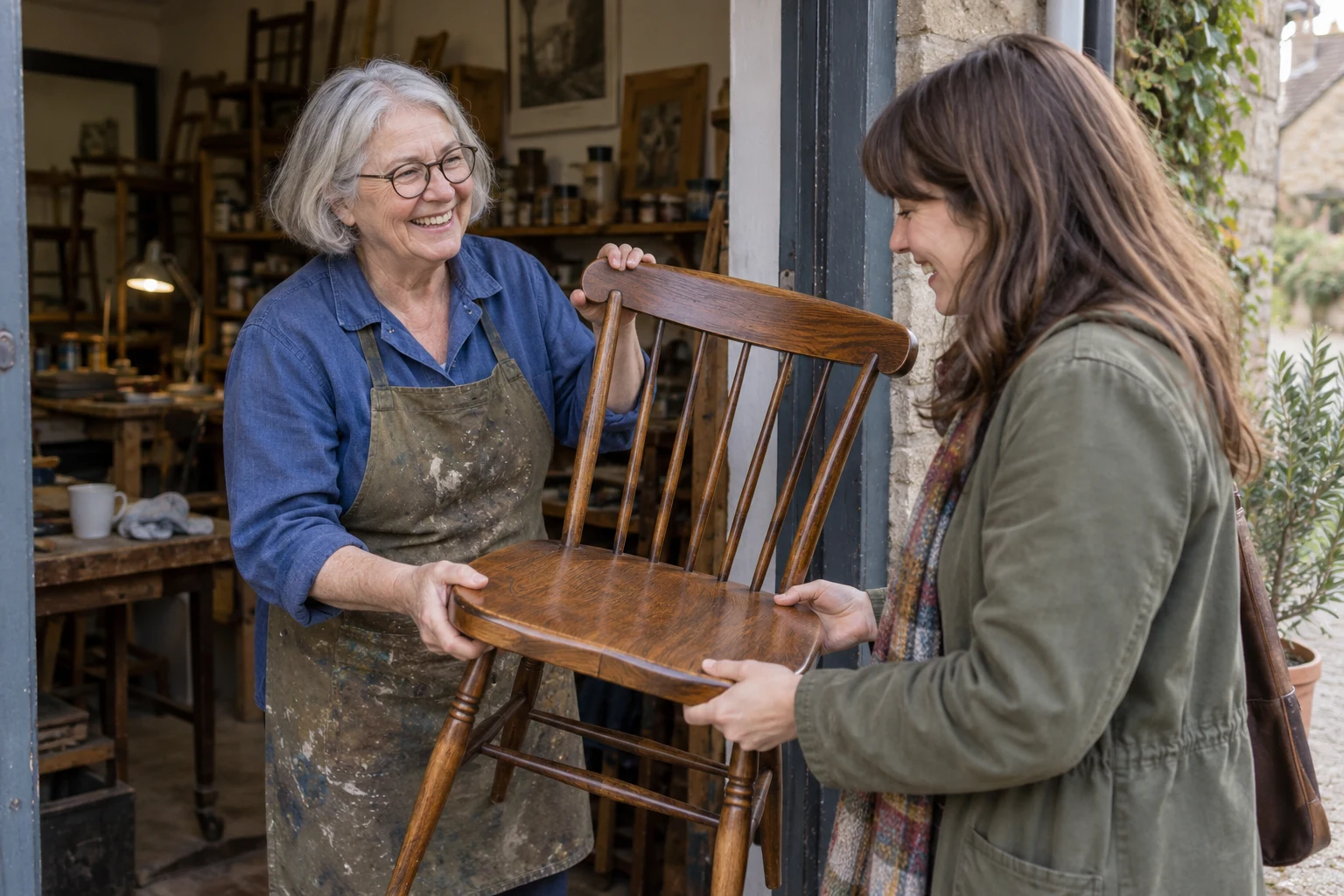
Before-and-after photographs are useful when they are labelled honestly and taken with permission. Include a detail that shows the care involved: a joiner’s finish, a clean installation, a prepared breakfast table or a product in normal use. Explain the customer’s starting point and the decisions made along the way.
If a project cannot be photographed, describe the process and include a review or a clearly labelled worked example. Never present a stock image as a completed client job.
Make social proof accessible
Use readable text, useful alternative text for images and captions that add context. Do not put the entire testimonial inside an image that screen readers cannot read. Check that a carousel can be paused and that the important proof is still visible when scripts are blocked or a visitor uses a keyboard.
On social platforms, save permission records and the original message. If a customer asks for a photograph to be removed, respect the request and check where else it appears.
Respond to concerns with care
A mixed or negative review is still part of the public record. Reply without sharing private details, acknowledge the concern and explain how someone can continue the conversation. Avoid arguing or offering a public discount in response to a complaint.
Patterns matter more than one comment. If several customers mention slow replies, unclear delivery or a difficult booking step, fix that part of the experience and let future proof show the change.
Reuse proof without making it stale
A strong customer story can become a web section, a short social post, an advert variation and a helpful follow-up email. Keep the detail consistent and refresh examples as the business grows. Make it clear when a result is a customer’s experience rather than a guarantee for everyone.
Ask permission for each use when the original agreement did not cover advertising or a different channel. Store the source, date and approved wording in a small library so you do not have to search old messages.
Measure the difference
Compare pages or campaigns with relevant proof against versions without it when you can. Watch qualified enquiries, booking starts, checkout completion and the questions customers ask. Do not assume a higher click-through rate means the proof improved sales; follow the journey to an outcome.
Ask new customers which example helped them feel confident. Their answer can show which detail to make clearer next time.
A simple proof project
Choose one service or product. Ask three recent customers for an honest review, request permission for one photograph or short story and place the evidence beside the main action on the relevant page. Check the page on a phone and record the date so you can review suitable enquiries later.
Use the words customers actually use
When you request feedback, listen for the phrase that describes the problem and the result. A customer may say that you “explained everything before starting”, “left the room tidy” or “made the first order feel simple”. With permission, keep that language in the case study and on the page. It is more recognisable than a polished claim written by someone who was not there.
Share the context without exposing private details. The reader should understand why the customer chose you, what they received and what they valued. That makes the proof useful for a similar person who is still deciding.
Hart & Forge helps UK SMEs turn genuine customer evidence into clearer websites, social campaigns and conversion journeys. Talk to us about putting your best proof to work, and we can help you choose the format and placement that fit your customers.